Harmful effects of intentional flattery, praise and affirmation
All of us may have seen the behavior where people flatter, praise and affirm others without really meaning it. The audience laughing at the comedian's bad jokes, clapping for political leaders repeating talking points, the nurse calling a patient they are not related to "Mama" or "Papa", or when a family member or patient advocate who have been vocal about the patient's needs is told how much their help and input is valued, yet being warned their involvement or presence may be restricted. Do people do this hoping to get something? To make themselves look good? Are they more liked by the people they flatter or their own group? Will the person overlook their lack of real concern or effort?
Why is our health care system and government broken?
Dr. Zafar Essak, MD - Vancouver, BC - October 6, 2024
I decided to write a series of posts covering different aspects of our health care system and government to help us apply our thinking to the problems and solutions. We need a change in our expectations of professional leaders, government leaders and how government works if we are to save our publicly funded health care system and our democratic rights.
How health care administration exceeded funding for doctors
Dr. Zafar Essak, MD - Vancouver, BC - October 6, 2024.
This is Part 1 in a series: Why is our health care system and government broken? Let’s apply our thinking to the problems and solutions.
Part 1. How health care administration exceeded funding for doctors.
Every day we hear reports that our health care system is broken and having difficulty keeping up with the health needs of patients and people throughout BC and across the country. Politicians say it’s a lot of unexpected circumstances, they’re doing the best that can be done; they're following what the experts are telling them, and we should trust them to carry on with it.
Documentary: Waiting To Die - Canada's Health Care Crisis
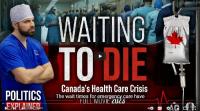 A one hour documentary by Aaron Gunn, "Waiting To Die - Canada's Health Care Crisis" was released on August 14, 2023 and in the first day it had more than 23,000 views and more than 700 comments from people sharing their own experiences and thoughts.
Waiting to Die | Canada's Health Care Crisis
https://www.youtube.com/watch?v=l-Ms1ZekHVU
Record-long queues. Emergency rooms overwhelmed.
A chronic doctor shortage that has left more than 6 million Canadians without a family physician.
But what’s driving this problem? And is there a solution?
Here’s what you need to know
Three Reasons for a Chat with Dr. Bonnie Henry, BC Health Minister Adrian Dix and BC Premier David Eby
Dr. Zafar Essak, MD - Vancouver, BC - April 5, 2023
 Having worked for 40 years as a family physician in BC, when I heard the media announcements recently: that on April 3, 2023 vaccine mandates will be lifted on BC public service government workers but not on health care workers until it can become a permanent condition of work in health care, and that we may see only combined vaccines in the fall; it struck me that it’s time we had a real chat. This can’t wait.
More than 10,000 people sign petition to repeal BC's Bill 36
Vancouver, BC - February 13, 2023.
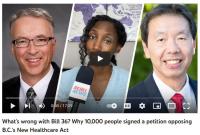 A petition to repeal BC's Bill 36 - Health Professions and Occupations Act has already gathered more than 10,800 signatures. It was presented to the BC Parliament when the session resumed earlier this month. More signatures are still being collected and will be presented to the House later. It is already one of the largest petitions introduced to the BC Legislature.
Last chance to save BC's crumbling health care system may rest with the silent majority of physicians defeating the PMA
Opinion
Dr Z. Essak, MD - Vancouver, BC - November 27, 2022.
The BC health care system continues to show larger cracks as it crumbles. Are patients and doctors to believe that the BC NDP Government and the Association of the Doctors of BC have a plan to fix it? You better think again. There is nothing in the Physician Master Agreement (PMA) that is going to fix our health care system. It is not going to restore longitudinal care. It doesn't even pretend to offer a GP for everyone, or even access to timely specialist care or surgery.
What do Family Doctors do?
 Dr Carmen Eadie, Vancouver BC, Sep 4, 2022.
The biggest problem with being a Family Doctor is that no one knows exactly what we do. We are involved in so many aspects of a person’s life that the lens is not clear to other people.
When we are young doctors, we tend to have younger practices: we would deliver babies, treats sports injuries, help young parents navigate parenthood while trying to maintain a family and a career. We looked after middle-aged people and tried to help them prevent chronic disorders by discussing diet, exercise, and lifestyle changes. We worked with teenagers and their angst. We helped families with children with special needs and chronic childhood illness that needed extra support. All of this regardless of the limited remuneration.
Dr Ian McWhinney, Canada's "Founding Father of Family Medicine"
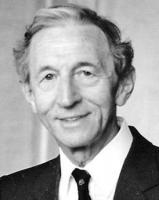 Dr Ian R. McWhinney was an English physician and academic who moved to the University of Western Ontario as the first chair of family medicine in Canada where he started the country's first Department of Family Medicine in 1968. He became known in Canada and around the world as the "Father of Family Medicine".
He published over 100 articles during his lifetime and is well known for his influential book, Textbook of Family Medicine. The opening chapter: The Origins of Family Medicine, provides a brief history of medicine including the emergence and need for Family Medicine.
Are band-aids the right Rx to save family medicine?
 The $118 million announced consisting of $75 million new money plus redistribution of existing funds as a "stabilization fund" is an interim measure, a one-time handout over 4 months October 2022 to Jan. 31st, 2023, to help family physicians (FP) in the community, both longitudinal practices and walk-in clinics with overhead costs to keep their doors open until January 2023. This first step is intended to buy more time for the government and DoBC to develop a "new payment model" that will be introduced and implemented. According to DoBC President's letter, the new model will be based on compensation determined by a number of factors including time, patient encounters, and attachments/complexity.